G Major
Reviewed for accuracy · Last updated June 2026 · Maintained by Justin Evans
Practice G Major
Reading about it is one thing. Drilling it is what makes it automatic.
Introduction
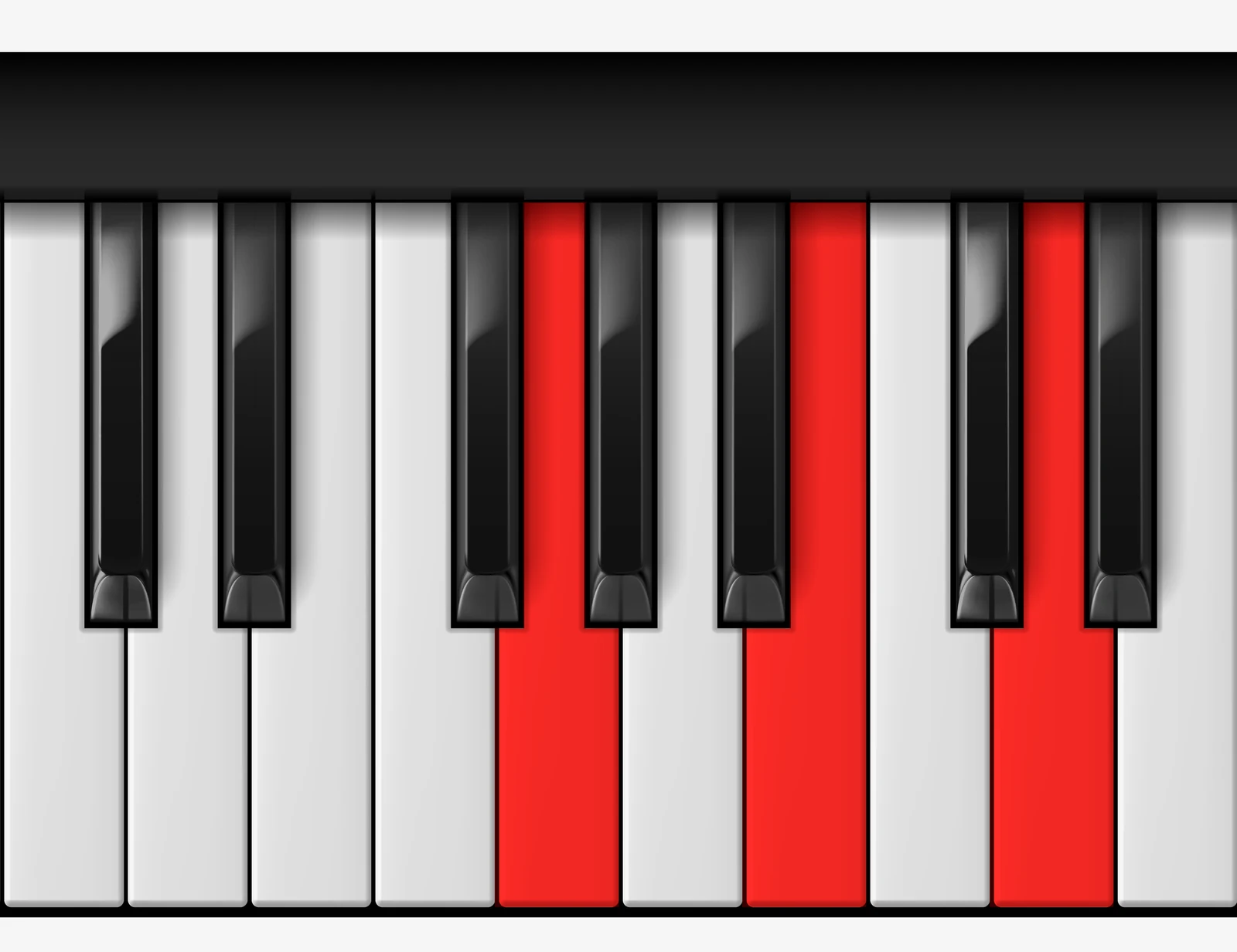
The G Major chord is a three-note chord made up of G, B, and D. It is built from a root, major third, and perfect fifth.
Notes
How to Play the G Major
Right Hand (RH)
Place your right hand over the keys with the thumb on the root. Use the fingering: 1 – 3 – 5
Left Hand (LH)
For the left hand, start with your pinky on the root. Use the fingering: 5 – 3 – 1
G Major Inversions
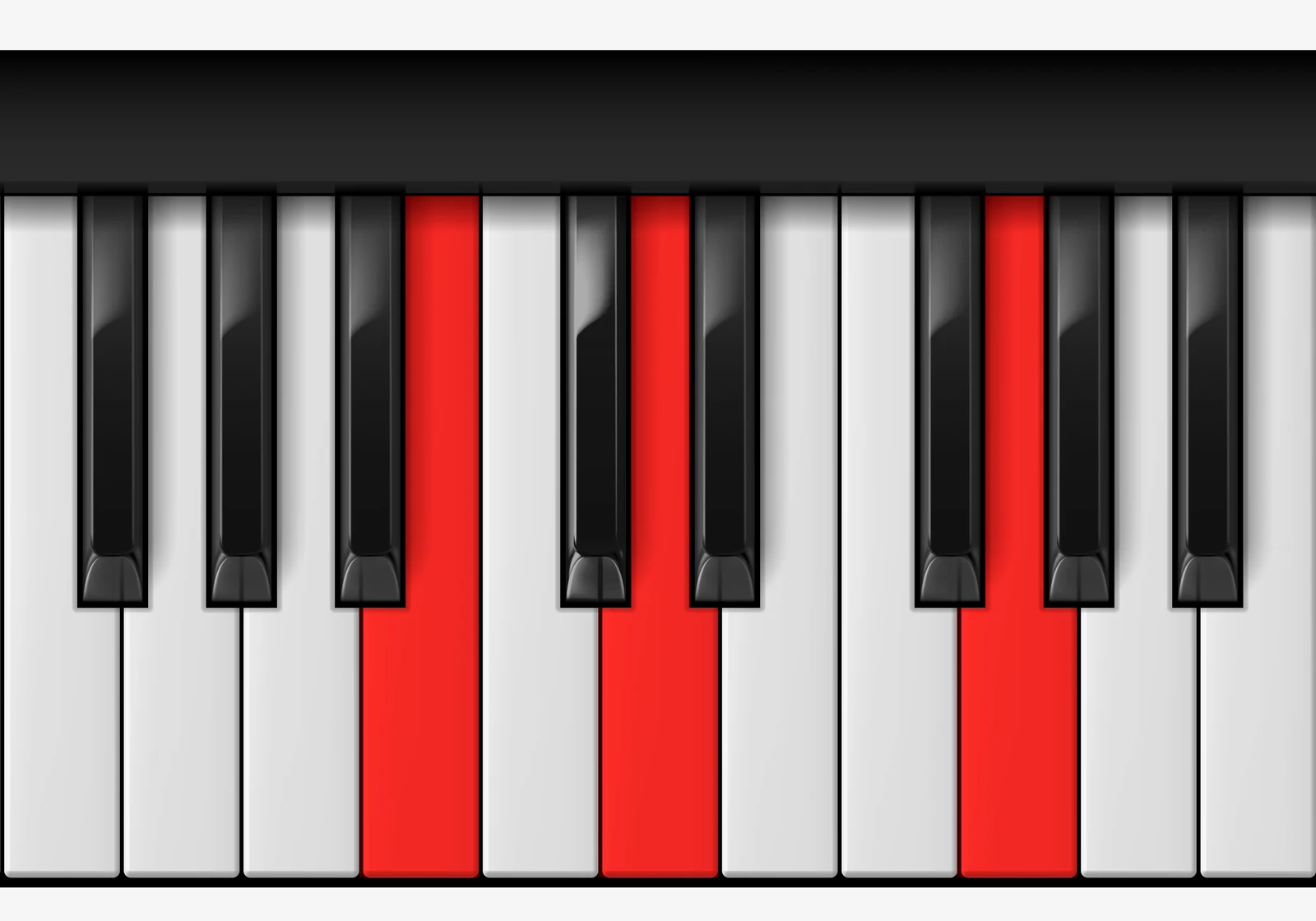
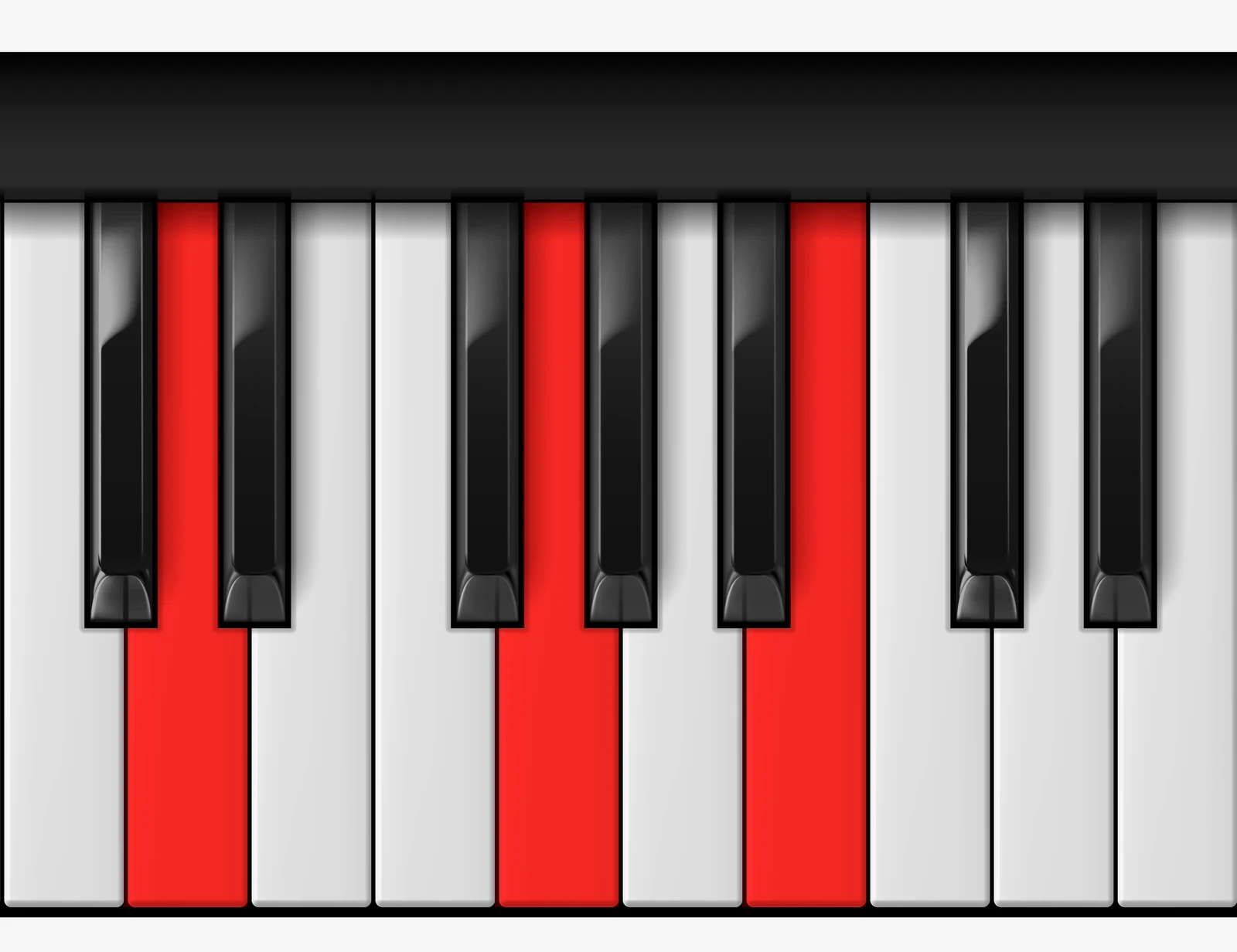
| Position | Notes |
|---|---|
| Root Position | G – B – D |
| 1st Inversion | B – D – G |
| 2nd Inversion | D – G – B |
Key Signature
A chord has no key signature of its own, but the G Major is the tonic (I) chord of G Major, whose key signature has 1 sharp (F♯).
Order of sharps
Sharps are added to a key signature in a fixed order. Each new sharp key adds the next sharp on the list.
Mnemonic: Father Charles Goes Down And Ends Battle
Chords in the Key of G Major
These are the triads built on each degree of the G major scale:
Common G Major Progressions
Pick a progression and press play. Change the key to hear it anywhere — every chord is built from the same theory as the chord pages, so the notes always agree.
The most fundamental major progression — the I, IV and V chords. The backbone of countless folk, country, blues and rock songs.
Theory: Intervals
The G Major is built by stacking intervals from the root note. The formula R-M3-P5 describes the scale degrees used. The intervals P1-M3-P5 show the distance between each note in the chord.
G Major — Frequently Asked Questions
What is the G Major chord on piano?
What notes make up the G Major chord?
What fingering do I use for G Major?
What are the inversions of G Major?
What songs use the G Major chord?
What chords pair well with G Major?
Why is G Major so common in popular music?
Practice Tips
- Practice G → C → D → G as a loop until the transitions feel automatic — this single progression covers an enormous portion of popular music.
- Notice the hand shape: on G Major your fingers are on three consecutive white keys with two skipped. Memorise this visual pattern.
- Try the I–V–vi–IV progression: G–D–Em–C — one of the most popular four-chord sequences in all of pop.
- Work through G Major inversions: root (G–B–D), first inversion B–D–G, second inversion D–G–B — all white keys make this easy.
- Play G in your left hand as octaves while your right hand holds the chord, then switch — this builds independence between hands.
Related Tools
References & Further Reading
How this chord page is sourced & verified
The note names, intervals, fingering, and harmony on this page are drawn from the established body of Western music theory and verified against the conventions below — the same fundamentals taught in conservatories and music programs. We list categories of source material rather than individual titles, and reference the standards themselves rather than any single edition.
- Standard music theory texts — Widely taught fundamentals of pitch, rhythm, and notation.
- Western tonal harmony conventions — Established rules for chord construction, voice leading, and key relationships.
- Interval and chord construction standards — The conventional spelling of intervals, triads, sevenths, and extensions.
- Scale and mode theory — The common derivation of major, minor, pentatonic, blues, and modal scales.
- Piano pedagogy and technique references — Long-standing practices for fingering, hand position, and practice.
Spot something that looks off? Use the note form below — corrections are reviewed by hand.
Leave a note
Spotted a typo, have a question, or want to add something? We read every note.