D Major
Reviewed for accuracy · Last updated June 2026 · Maintained by Justin Evans
Practice D Major
Reading about it is one thing. Drilling it is what makes it automatic.
Introduction
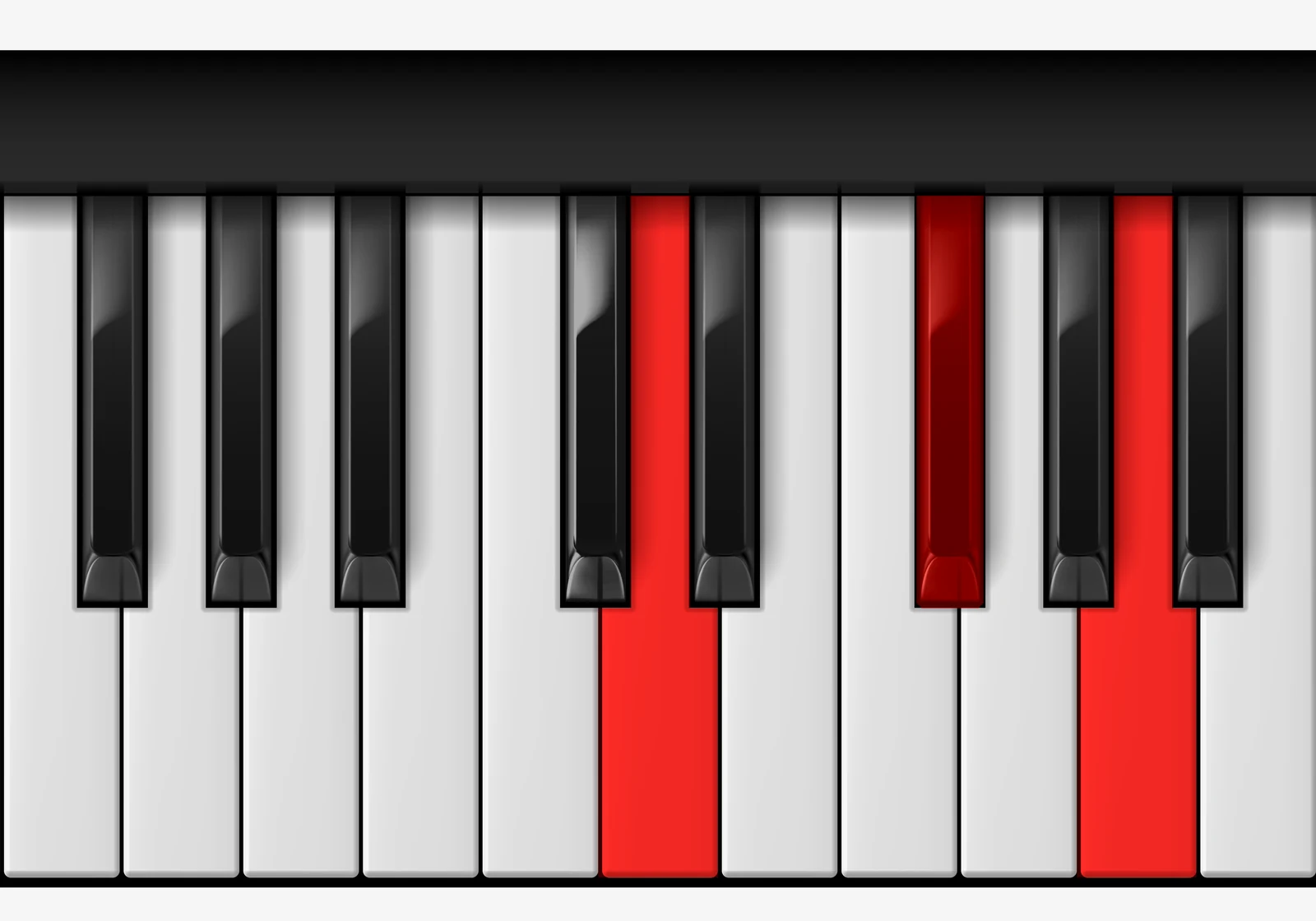
The D Major chord is a three-note chord made up of D, F♯, and A. It is built from a root, major third, and perfect fifth.
Notes
How to Play the D Major
Right Hand (RH)
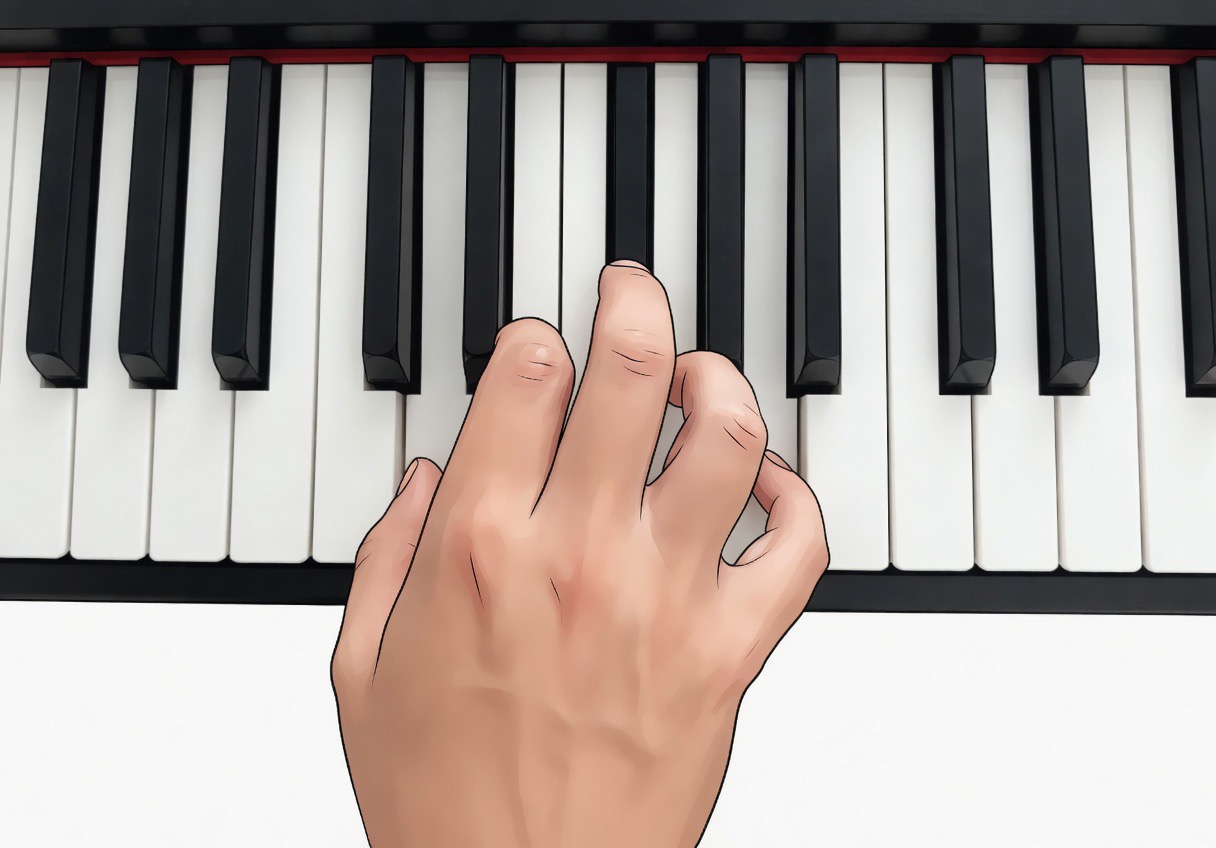
Place your right hand over the keys with the thumb on the root. Use the fingering: 1 – 3 – 5
Left Hand (LH)
For the left hand, start with your pinky on the root. Use the fingering: 5 – 3 – 1
D Major Inversions
| Position | Notes |
|---|---|
| Root Position | D – F♯ – A |
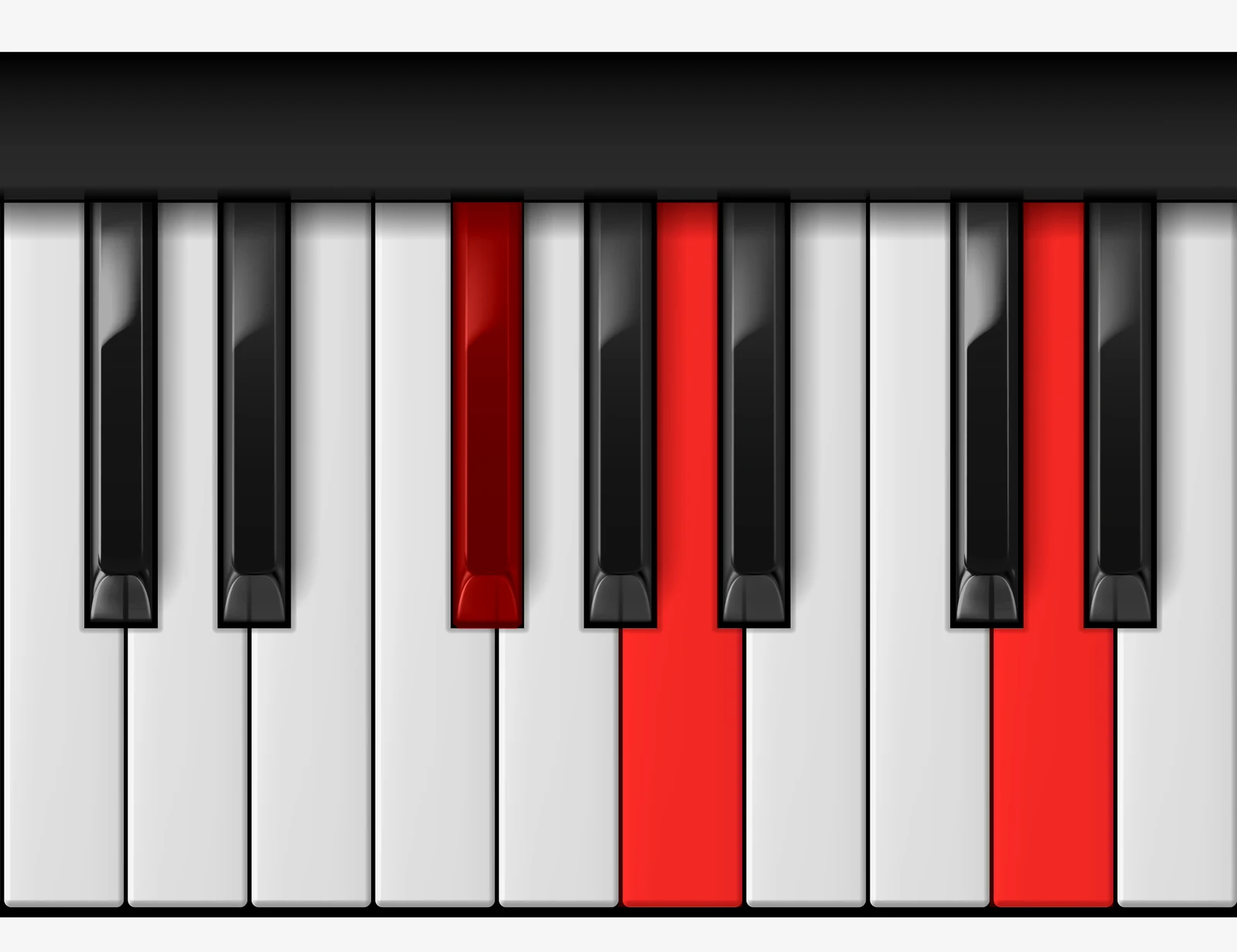
| 1st Inversion | F♯ – A – D |
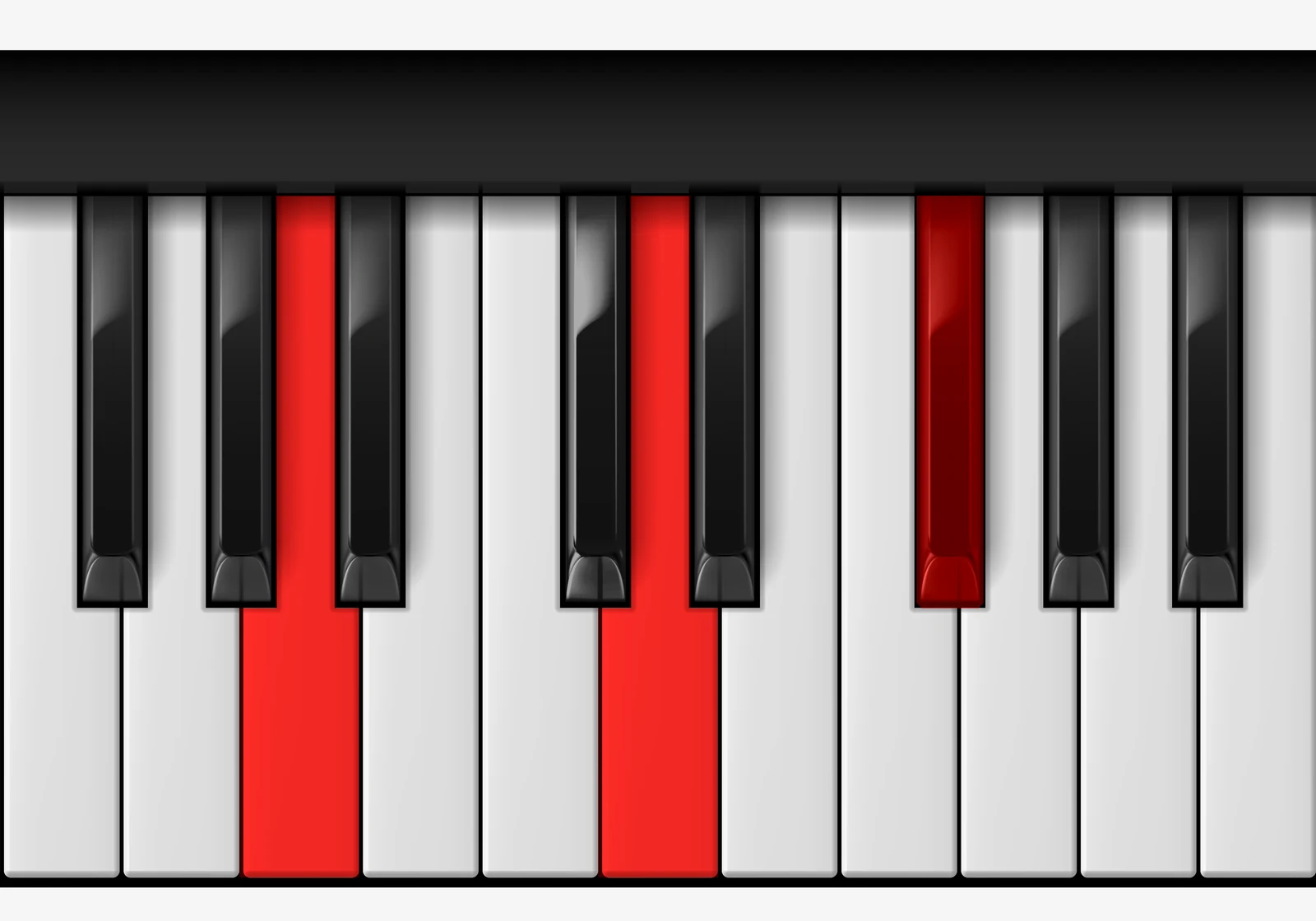
| 2nd Inversion | A – D – F♯ |
Key Signature
A chord has no key signature of its own, but the D Major is the tonic (I) chord of D Major, whose key signature has 2 sharps (F♯, C♯).
Order of sharps
Sharps are added to a key signature in a fixed order. Each new sharp key adds the next sharp on the list.
Mnemonic: Father Charles Goes Down And Ends Battle
Chords in the Key of D Major
These are the triads built on each degree of the D major scale:
Common D Major Progressions
Pick a progression and press play. Change the key to hear it anywhere — every chord is built from the same theory as the chord pages, so the notes always agree.
The most fundamental major key progression in Western music. Heard in country, folk, bluegrass, and rock across thousands of songs.
Songs That Use the D Major
| Song | Artist | How It Appears |
|---|---|---|
| Sweet Home Alabama | Lynyrd Skynyrd | D is the I chord — the famous D–C–G riff opens and resolves to D major |
| Life on Mars? | David Bowie | Opens with an iconic D major piano introduction — D is the tonic throughout |
| Brown Eyed Girl | Van Morrison | D is the V chord (dominant) in this G major classic — G–C–G–D progression |
| Hey Ya! | OutKast | D is the V chord in this G major hit — part of the I–IV–V–VI progression |
Theory: Intervals
The D Major is built by stacking intervals from the root note. The formula R-M3-P5 describes the scale degrees used. The intervals P1-M3-P5 show the distance between each note in the chord.
D Major — Frequently Asked Questions
What is the D Major chord on piano?
What notes make up the D Major chord?
What fingering do I use for D Major?
What are the inversions of D Major?
What songs use the D Major chord?
What chords pair well with D Major?
How does D Major feel compared to other major chords?
Practice Tips
- Find F# first — it is the black key between the group of two black keys, the second one from the left in each octave group.
- Arch your middle finger up to F# while keeping thumb on D and pinky on A — avoid collapsing the wrist.
- Practice D → G → A → D to lock in the most common chord sequence in country and folk music.
- Work through both inversions: D/F# (F#–A–D) and D/A (A–D–F#) — D/F# is especially useful for bass line movement.
- Try playing D Major with your left hand in octaves (D2–D3) while your right hand holds the chord above.
Related Tools
References & Further Reading
How this chord page is sourced & verified
The note names, intervals, fingering, and harmony on this page are drawn from the established body of Western music theory and verified against the conventions below — the same fundamentals taught in conservatories and music programs. We list categories of source material rather than individual titles, and reference the standards themselves rather than any single edition.
- Standard music theory texts — Widely taught fundamentals of pitch, rhythm, and notation.
- Western tonal harmony conventions — Established rules for chord construction, voice leading, and key relationships.
- Interval and chord construction standards — The conventional spelling of intervals, triads, sevenths, and extensions.
- Scale and mode theory — The common derivation of major, minor, pentatonic, blues, and modal scales.
- Piano pedagogy and technique references — Long-standing practices for fingering, hand position, and practice.
Spot something that looks off? Use the note form below — corrections are reviewed by hand.
Leave a note
Spotted a typo, have a question, or want to add something? We read every note.