B mi13♭5
Listen plays the chord. Play Along lights up each note in order so you can follow.
Introduction
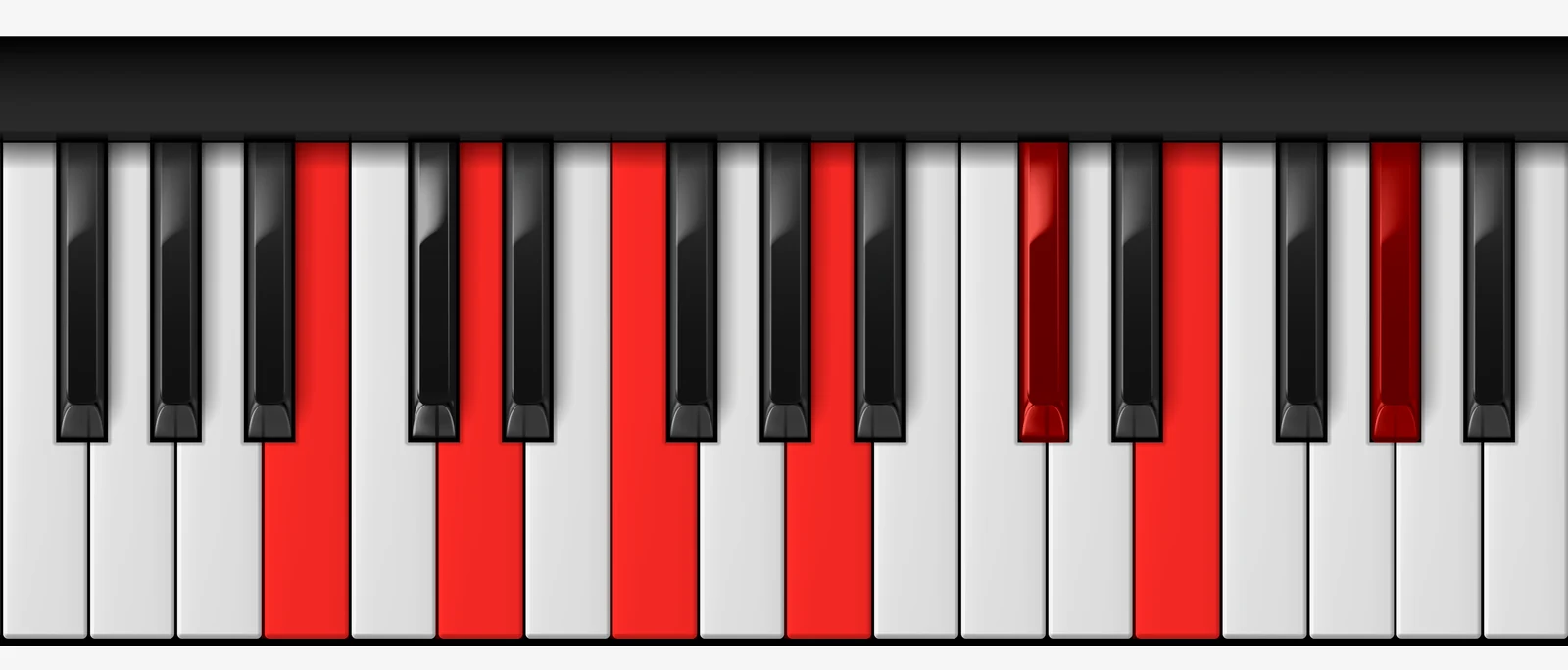
The B mi13♭5 chord is a seven-note chord made up of B, D, F, A, C♯, E, and G♯. It is built from a root, minor third, diminished fifth, minor seventh, major ninth, perfect eleventh, and major thirteenth.
Notes
Key Signature
The key of B mi13♭5 has 5 sharps.
Order of sharps
Sharps are added to a key signature in a fixed order. Each new sharp key adds the next sharp on the list.
Mnemonic: Father Charles Goes Down And Ends Battle
Chords in the Key of B Major
These are the diatonic triads built on each degree of the B major scale:
Theory: Intervals
The B mi13♭5 is built by stacking intervals from the root note. The formula R-m3-d5-m7-M9-P11-M13 describes the scale degrees used. The intervals P1-m3-d5-m7-M9-P11-M13 show the distance between each note in the chord.
B mi13♭5 — Frequently Asked Questions
What notes are in the B mi13♭5 chord?
How is Bmi13♭5 used in music?
What is the scale degree formula for Bmi13♭5?
Practice Tips
- Start by placing your thumb on B and spacing remaining fingers across the chord.
- Practice Bmi13♭5 slowly with separate hands before combining.
- Listen carefully to the tension created by the altered tones in this chord.
- Try voicing Bmi13♭5 in different octaves to find the most comfortable position.
- Resolve Bmi13♭5 to a nearby chord to hear its function in context.