The C♭ Dominant 7th chord is a four-note chord made up of C♭, E♭, G♭, and B♭♭. It is built from a root, major third, perfect fifth, and minor seventh.
Construction
C♭ Dominant 7th = Root + Major 3rd + Perfect 5th + Minor 7th = C♭ · E♭ · G♭ · B♭♭
| Note | Interval | Degree |
|---|---|---|
| C♭ | Root | 1 |
| E♭ | Major 3rd | 3 |
| G♭ | Perfect 5th | 5 |
| B♭♭ | Minor 7th | ♭7 |
C♭ Dominant 7th Inversions
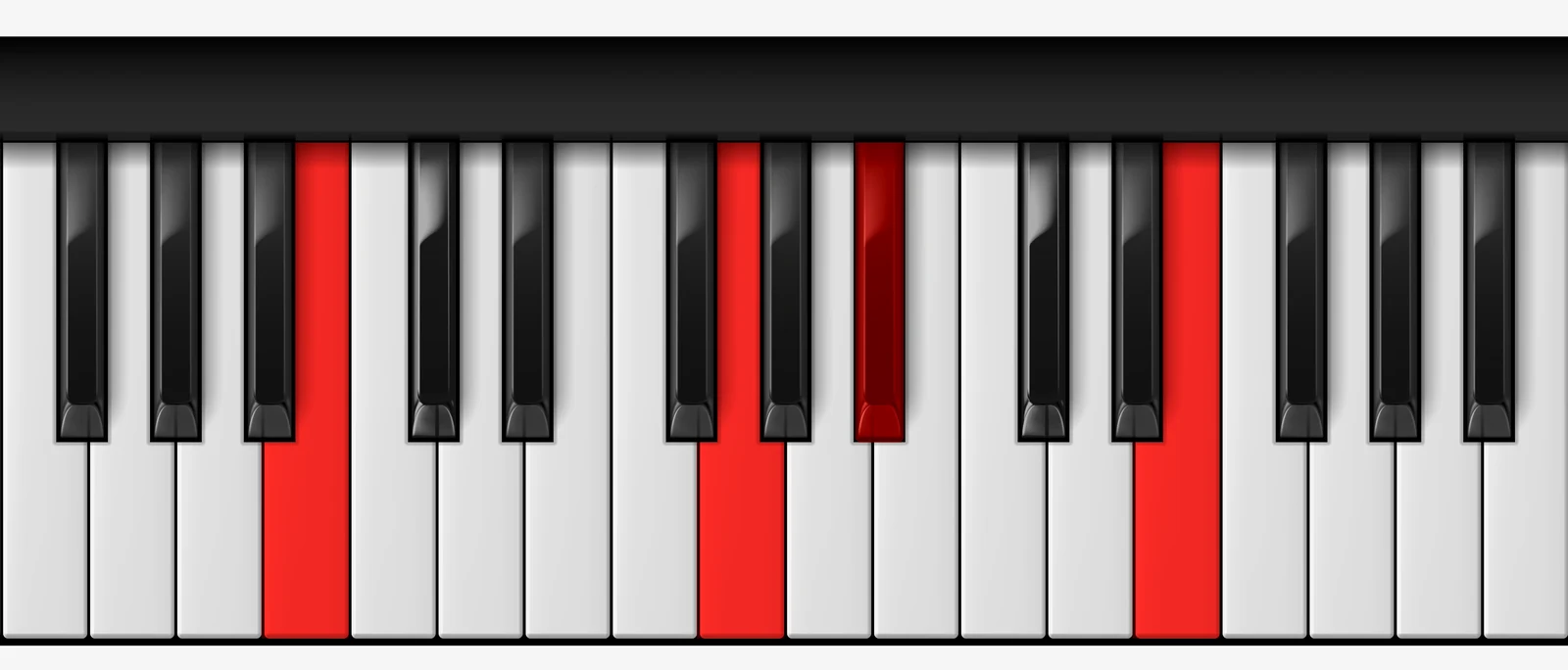
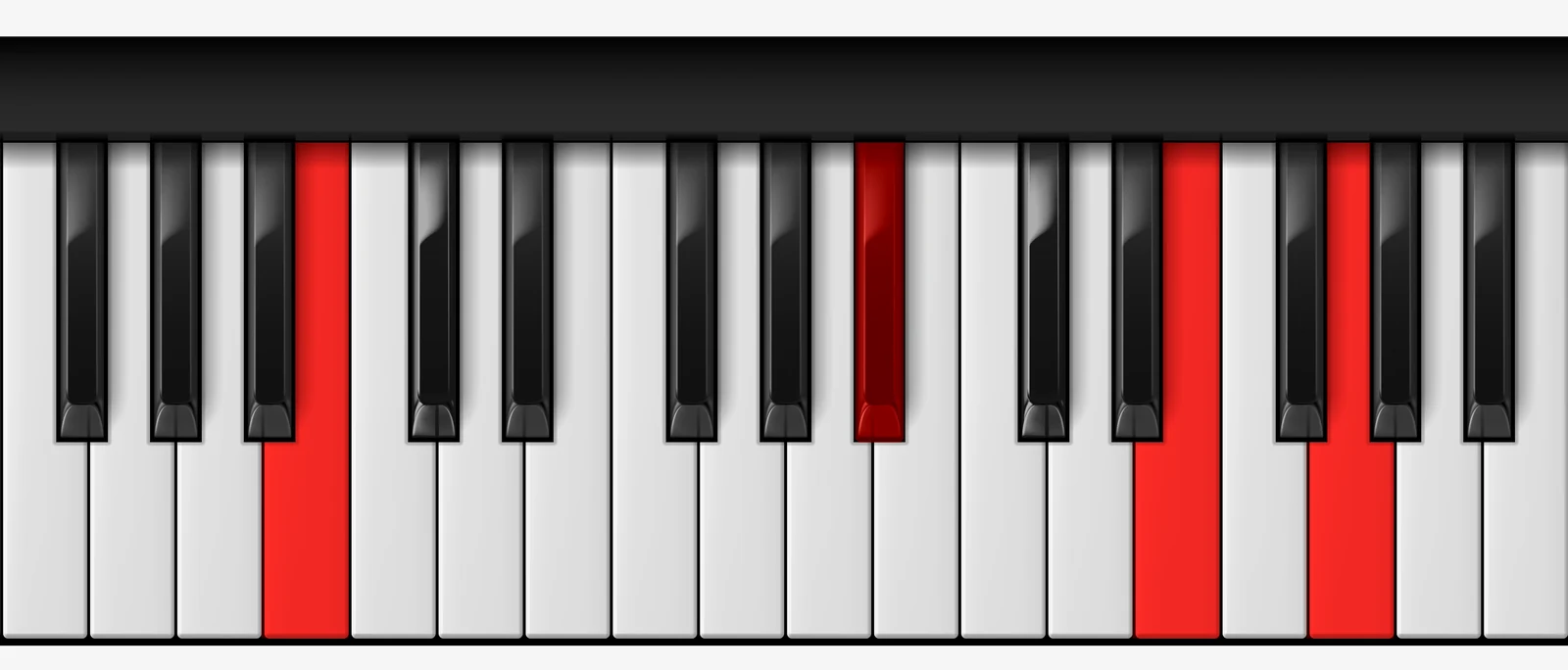
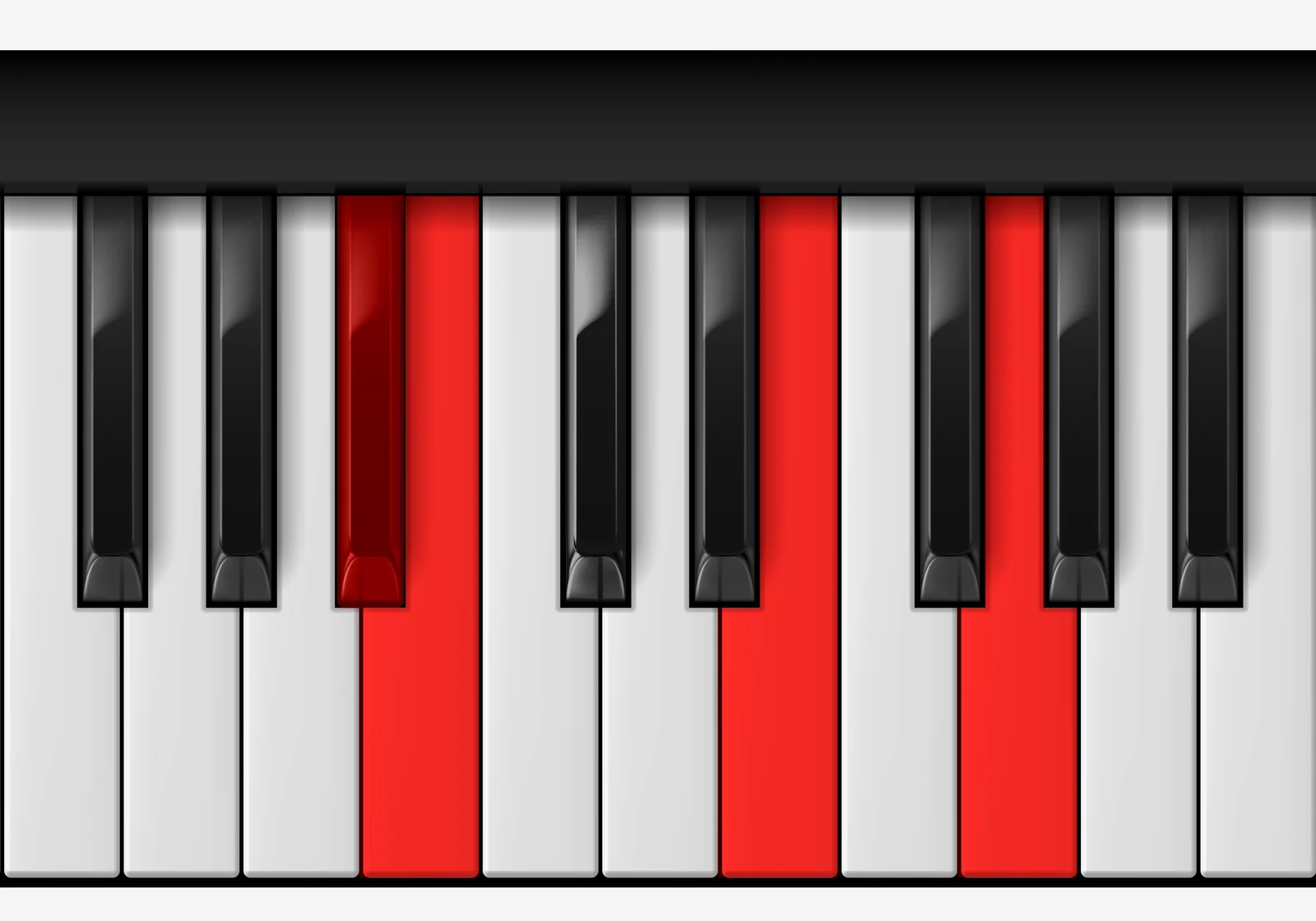
| Position | Notes |
|---|---|
| Root Position | C♭ – E♭ – G♭ – B♭♭ |
| 1st Inversion | E♭ – G♭ – B♭♭ – C♭ |
| 2nd Inversion | G♭ – B♭♭ – C♭ – E♭ |
| 3rd Inversion | B♭♭ – C♭ – E♭ – G♭ |
Key Signature
A dominant chord points home to the key a fifth below its root: the C♭ Dominant 7th is the V (dominant) of E Major, so the relevant key signature is that key’s — 4 sharps (F♯, C♯, G♯, D♯). Spelled as a scale, these notes are Cb Mixolydian.
F♯C♯G♯D♯
Order of sharps
Sharps are added to a key signature in a fixed order. Each new sharp key adds the next sharp on the list.
F♯C♯G♯D♯A♯E♯B♯
Mnemonic: Father Charles Goes Down And Ends Battle
Chords in the Key of E Major
These are the triads built on each degree of the E major scale:
C♭ Dominant 7th — Frequently Asked Questions
What is the C♭ Dominant 7th chord on piano?
The C♭ Dominant 7th chord contains the notes C♭ – E♭ – G♭ – B♭♭. On piano, play these notes together to sound the chord.
What notes are in the Cb Dominant 7th chord?
The Cb Dominant 7th chord (Cb7) contains four notes: Cb (root), Eb (major third), Gb (perfect fifth), and Bbb (minor seventh). Bbb is enharmonically the same as A. This chord is the enharmonic equivalent of B7.
How does Cb Dominant 7th differ from Cb Major?
Cb Major contains three notes: Cb, Eb, Gb. Cb Dominant 7th adds a Bbb (minor seventh) on top. That one note transforms a stable chord into one with forward motion — it wants to resolve down a fifth to Fb Major (enharmonically E Major).
What does 'dominant' mean in music theory?
'Dominant' refers to the fifth scale degree. The dominant 7th chord is built on the fifth note of a key and contains a tritone that creates strong pull toward resolution. Cb7 is the dominant chord in the key of Fb Major (enharmonically E Major).
How is Cb Dominant 7th used in music?
Cb7 is the enharmonic equivalent of B7 and is used in theoretical contexts involving flat keys. In practice, musicians almost always write B7 instead. Cb7 resolves to Fb Major in a V7–I cadence.
What songs use dominant 7th chords?
Dominant 7th chords are the backbone of blues and early rock: every chord in a standard 12-bar blues is a dominant 7th. Hit the Road Jack (Ray Charles), Ain't Misbehavin' (Fats Waller), and countless jazz standards rely on dominant 7th movement for their harmonic drive.
What is the tritone in Cb Dominant 7th?
The tritone in Cb7 is the interval between Eb (the third) and Bbb (the seventh) — exactly 6 semitones apart. This is the same tritone found in B7 (D#/Eb and A/Bbb are enharmonic equivalents). The Eb resolves up to Fb and the Bbb resolves down to Ab.