Skip to content
piano.org
A piano reference: chords, scales, theory & ear training.
/

Chord · Reference entry

C Power

Power · C – G · intervals P1-P5

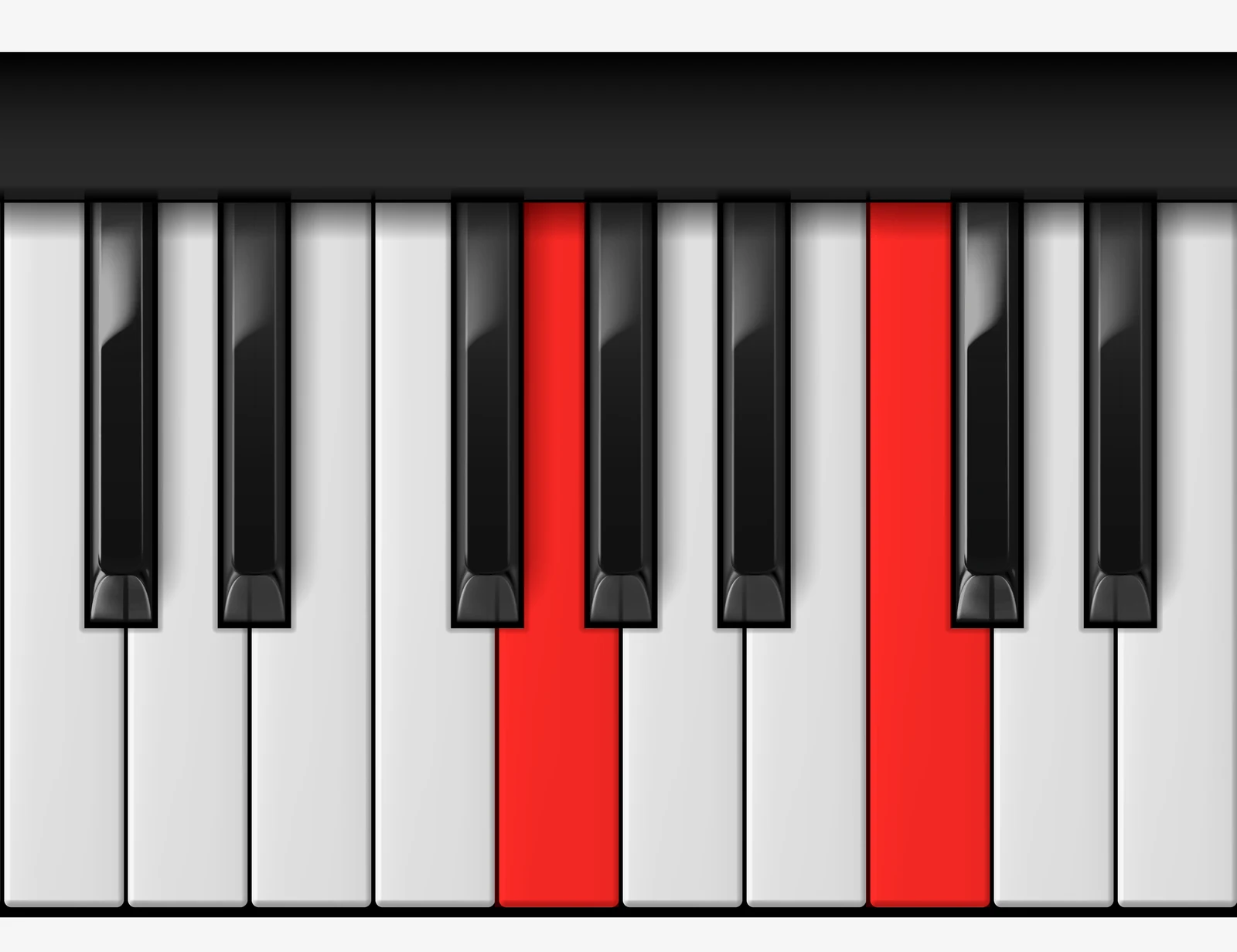
The C Power chord (C5) contains the notes C and G. Its interval formula is R-P5. Just the root and 5th — no 3rd, no major/minor identity, the staple of distorted rock guitar.

At the keyboard

C · G
Flashcards · Chord
Three questions on C Power
Answer on the keyboard, not with buttons. No login required.
C5

The C Power chord is a two-note chord made up of C and G. It is built from a root and perfect fifth.

Construction

C Power = Root + Perfect 5th = C · G
NoteIntervalDegree
CRoot1
GPerfect 5th5

C Power Inversions

C Power piano chord, 1st inversion — G, C
The C Power chord, 1st inversion, on a piano keyboard.
PositionNotes
Root PositionC – G
1st InversionG – C
2nd Inversion

Key Signature

A chord has no key signature of its own, but the C Power is the tonic (I) chord of C Major, whose key signature has no sharps or flats.

Chords in the Key of C Major

These are the triads built on each degree of the C major scale:

C1C2C3CEGC5C6C7C8
IC Major (major)
DegreeNumeralChordQuality
1IC MajorMajor
2iiD MinorMinor
3iiiE MinorMinor
4IVF MajorMajor
5VG MajorMajor
6viA MinorMinor
7vii°B DiminishedDiminished

C Power — Frequently Asked Questions

What is the C Power chord on piano?
The C Power chord contains the notes C – G. On piano, play these notes together to sound the chord.
What notes are in the C Power chord?
The C Power chord (C5) contains 2 notes: C, G. Formula: R-P5.
How is C5 used in music?
C5 is used in jazz, fusion, and contemporary music to add harmonic color. It appears as a dominant or tonic chord depending on context.
What is the scale degree formula for C5?
C5 uses scale degrees 1-5, giving it its distinctive sound.

Related Tools

Chord FinderLook up any chord — see the notes, hear it, and play along.Chord DrillTimed drills to build speed and recognition across all chord types.Practice RoomPlug in a MIDI keyboard and get real-time feedback on every chord and scale.Circle of FifthsVisualize key relationships, relative minors, and key signatures.MIDI MonitorLive MIDI message stream with note names, velocity, and a scrolling staff.

References & Further Reading

The note names, intervals, fingering, and harmony on this chord page are grounded in the following sources. Public domain treatises and scores are linked to their full text; primary data is piano.org's own interval-derived reference dataset — continuously maintained and human-verified, with no fixed publication date.

  1. 1

    George Grove (ed.)(1900)

    A Dictionary of Music and Musicians

    Public domain treatise
  2. 2

    Jadassohn, Salomon(1883)

    A Manual of Harmony

    Public domain treatise
  3. 3
  4. 4

Spot something that looks off? Use the note form below — corrections are reviewed by hand.

Entry reviewed and maintained by Justin Evans. Corrections are read and applied.Report an error

Corrections

Found an error or omission in this entry? Send a correction — every submission is reviewed.

0 / 1000