The C♯ Augmented chord is a three-note chord made up of C♯, E♯, and G♯♯. It is built from a root, major third, and augmented fifth.
Construction
C♯ Augmented = Root + Major 3rd + Minor 6th = C♯ · E♯ · G♯♯
| Note | Interval | Degree |
|---|---|---|
| C♯ | Root | 1 |
| E♯ | Major 3rd | 3 |
| G♯♯ | Minor 6th | ♯5 |
C♯ Augmented Inversions
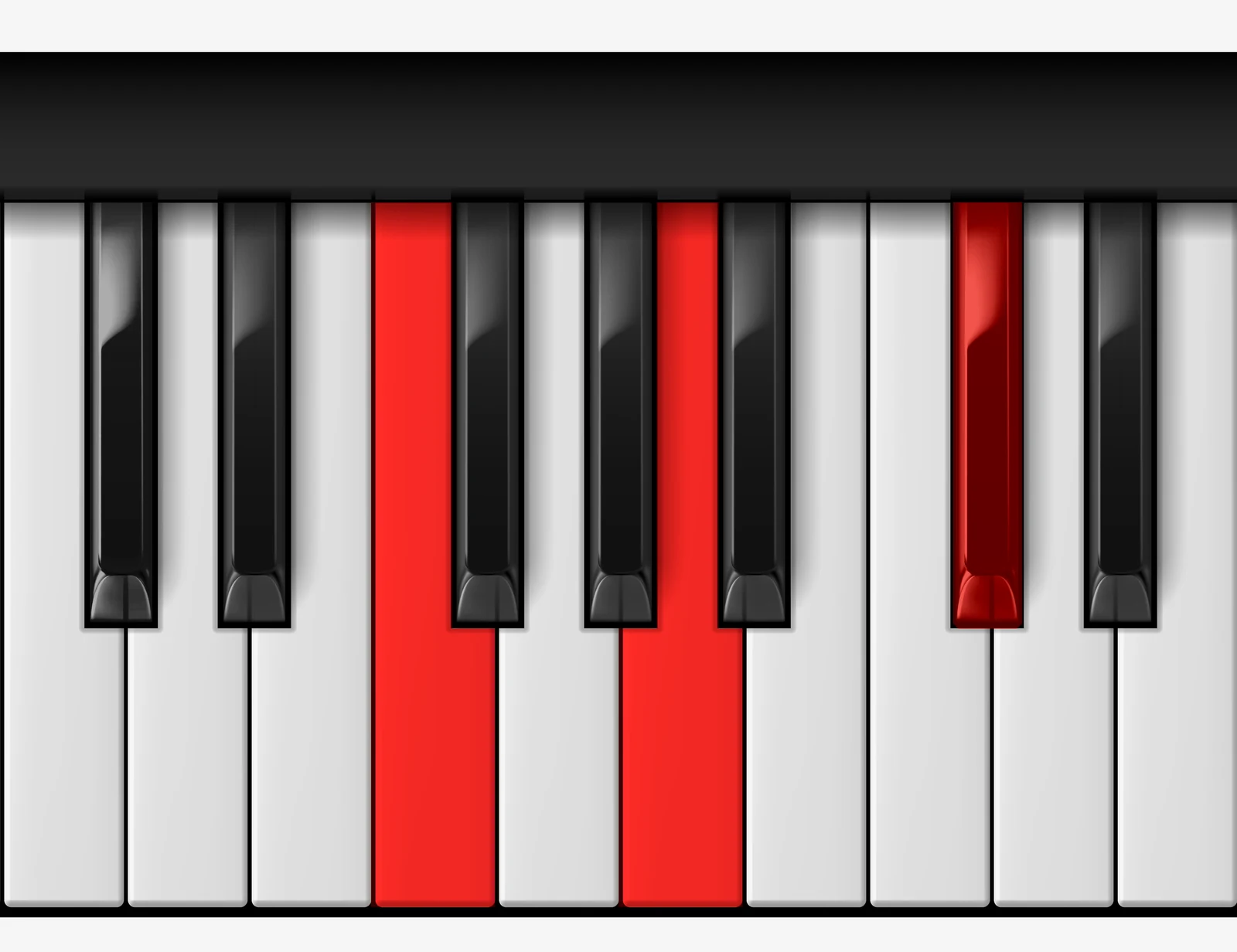
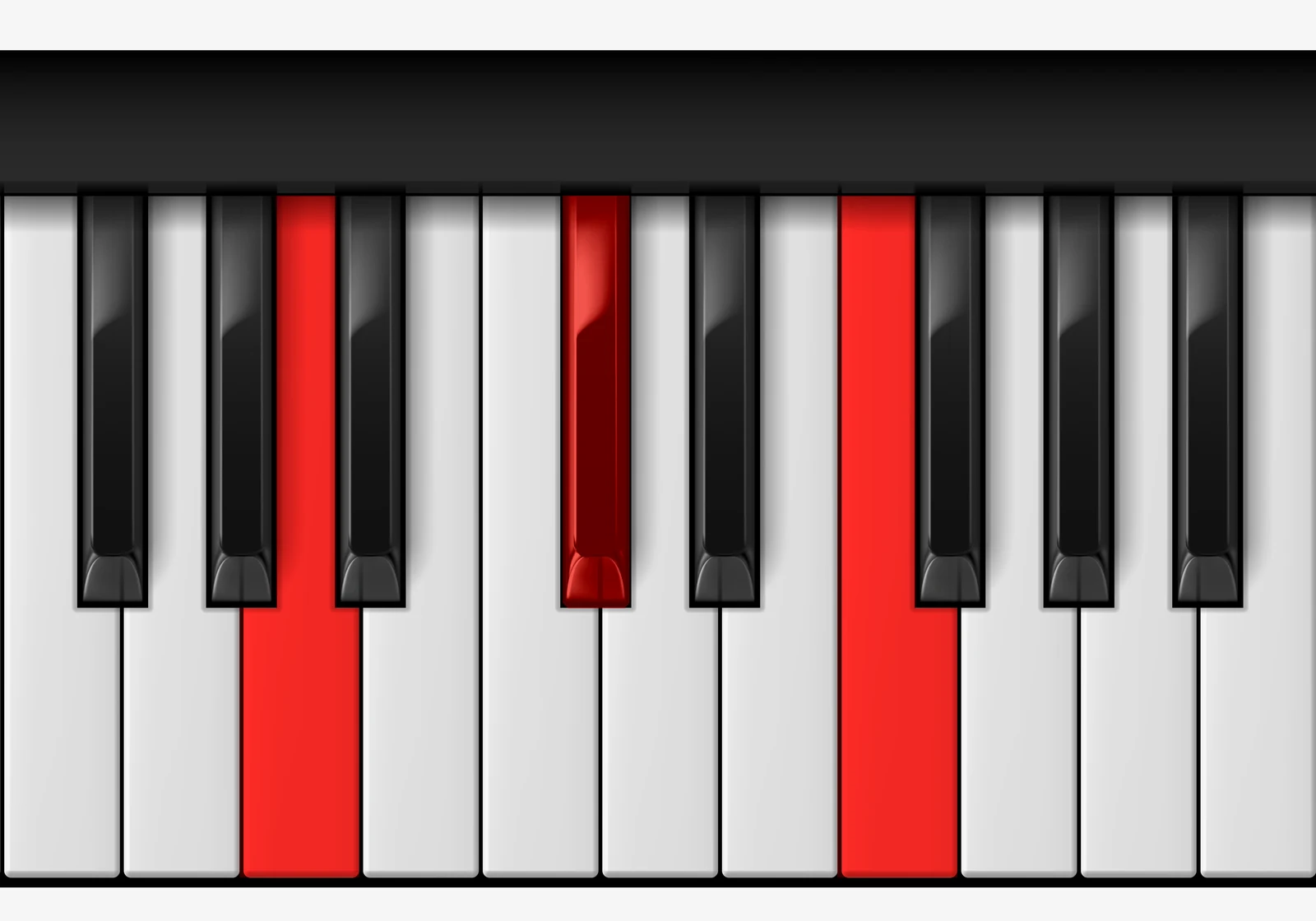
| Position | Notes |
|---|---|
| Root Position | C♯ – E♯ – G♯♯ |
| 1st Inversion | E♯ – G♯♯ – C♯ |
| 2nd Inversion | G♯♯ – C♯ – E♯ |
Key Signature
A Augmented chord is built from symmetrical or ambiguous intervals, so it doesn’t belong to a single key and has no key signature of its own.
Same Notes, Other Names
The notes C♯ – E♯ – G♯♯ aren’t exclusive to this chord. Depending on which note is the bass and how the chord functions, the same pitches also spell the following:
C♯ Augmented — Frequently Asked Questions
What is the C♯ Augmented chord on piano?
The C♯ Augmented chord contains the notes C♯ – E♯ – G♯♯. On piano, play these notes together to sound the chord.
What notes are in the C# Augmented chord?
The C# Augmented chord contains three notes: C# (root), E# (major third), and G## (augmented fifth — one semitone higher than a perfect fifth). The augmented fifth is what gives this chord its tense, unresolved quality.
How does the C# Augmented chord differ from C# Major?
The only difference between C# Augmented and C# Major is the fifth: C# Major has a perfect fifth, while C# Augmented raises it by one semitone to an augmented fifth (G##). This single change transforms a stable, resolved chord into one full of tension and forward motion.
What is the symbol for the C# Augmented chord?
The C# Augmented chord is written as C#aug or C#+. The "aug" or "+" symbol indicates the augmented fifth. In lead sheets and chord charts, both notations are common — C#aug appears in classical and jazz contexts while C#+ is common in pop and rock.
How do I use the C# Augmented chord in music?
Augmented chords create tension and a sense of motion. The most common uses are: (1) as a chromatic passing chord between the I and IV chords (e.g., C# → C#aug → IV), (2) over a chromatic bass line moving upward, and (3) in jazz as a substitute for dominant chords. The augmented fifth wants to resolve up by one semitone.
What are the inversions of the C# Augmented chord?
The C# Augmented chord has a unique property: all three of its inversions are enharmonically equivalent. Because each note is separated by exactly 4 semitones (a major third), rotating the notes always produces the same interval structure. C#aug in root position, first inversion, and second inversion all sound the same quality.
What songs use augmented chords?
Augmented chords appear in Oh! Darling (Beatles), which uses Aaug as a chromatic passing chord, and in many jazz standards as chromatic dominant substitutes. Stevie Wonder and Elton John frequently use augmented chords for their characteristic tension-building quality.