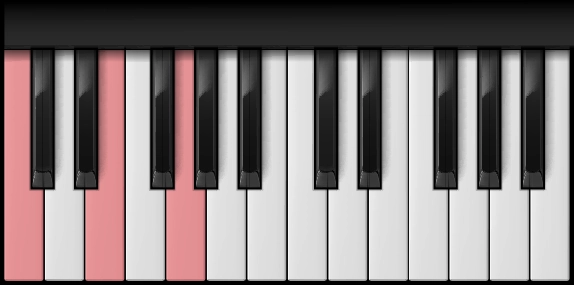
The C major triad is the most fundamental chord in Western harmony. Built from the notes C, E and G, it is the tonic of C major, the key with no sharps or flats, and its plain, resolved sound makes it the first chord most pianists learn.
Construction
A major triad stacks two thirds above the root. From C, a major third up gives E; from E, a minor third up gives G. Measured from the root, the three notes sit a major third and a perfect fifth apart.
| Note | Interval | Degree |
|---|---|---|
| C | Root | 1 |
| E | Major 3rd | 3 |
| G | Perfect 5th | 5 |
Because the fifth is perfect and the third is major, the chord is consonant and stable. It has no tendency tone pulling it elsewhere, which is exactly why it works as a point of rest.
How to play it
Right hand: thumb (1) on C, middle finger (3) on E, little finger (5) on G. The left hand mirrors it: 5 on C, 3 on E, 1 on G. Place the thumb first and let the other fingers fall onto their notes rather than aiming all three at once. Most players find the chord settles under the hand within a few days of slow practice.
A common early mistake is a collapsed first knuckle on the thumb. Keep a soft arch, as if you were holding a small orange, and the fifth finger stops buckling too.
Inversions
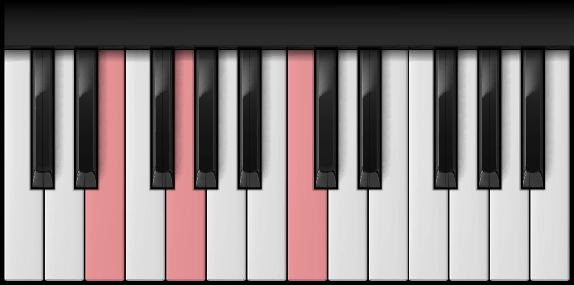
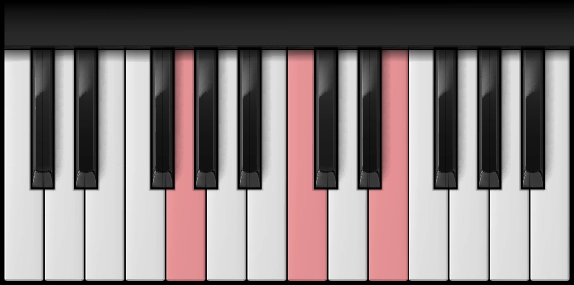
The same three notes can be voiced with a different note in the bass. With E in the bass the chord is in first inversion (written C/E); with G in the bass, second inversion (C/G). Inversions change the colour and the voice leading without changing the chord’s identity.
In the key of C
C major is chord I. The seven triads built on the C major scale give the diatonic set you can explore in the figure above: ii (D minor), iii (E minor), IV (F major), V (G major) and vi (A minor), each heard in relation to this tonic. The most common progressions here are I-IV-V, I-V-vi-IV and ii-V-I.